
In my last post, I talked about developmental stages. Each stage has a different effect on a child. Some children may appear to act out more as they go through these stages (think terrible twos) when in reality they are learning to be independent. In this post I want to talk about how we can adjust our parenting to our children, and how there are in fact right and wrong ways to parent. There are different kinds of parenting, but it is important to understand just how your parenting will affect your child later in life.
While we as parents are not the only influence in our children’s lives, the way they relate to us is important for their well-being (Lauer and Lauer p. 276). There are a million books out there that tell us how to raise our children, and most parents blow them off. So rather than quoting parenting books, I want to talk about the different styles of parenting that these books reference. The three main types of parenting are: authoritative, authoritarian, and permissive.
Authoritarian Parenting
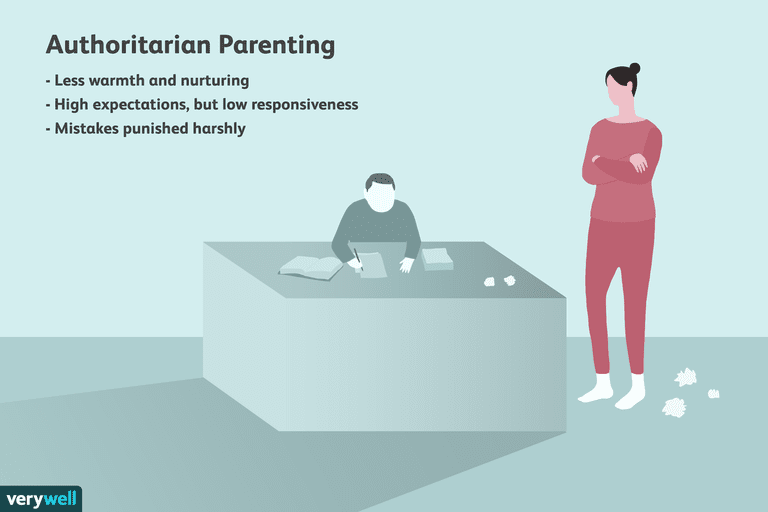
Authoritarian parenting can be described as controlling. What the parents say goes, and there is absolutely no wiggle room. Studies suggest that “children from authoritarian homes tend to be less well-adjusted and have problems trusting others” (Lauer and Lauer p. 279) They are more likely to develop problems with anger, have poorer health, and lower quality relationships as adults (Parade, Supple, and Helms 2012).
Permissive Parenting
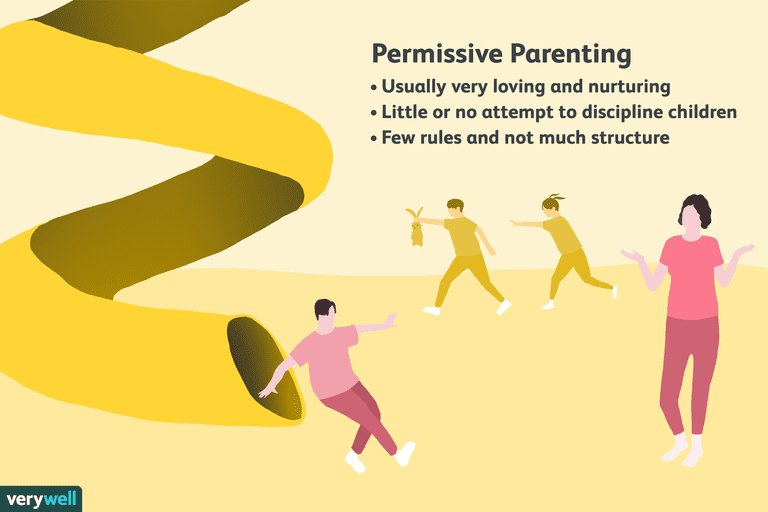
Permissive parenting is the polar opposite of authoritarian parenting. Permissive parenting is when parents don’t set any boundaries for their children. Children are encouraged to make their own decisions with little to no parental input, and the parent/child relationship itself could be described as more of a friendship. Children from a permissive home “may lack self control and the ability to adapt well to situations in which others have authority over them” (Lauer and Lauer p. 279).
Authoritative Parenting
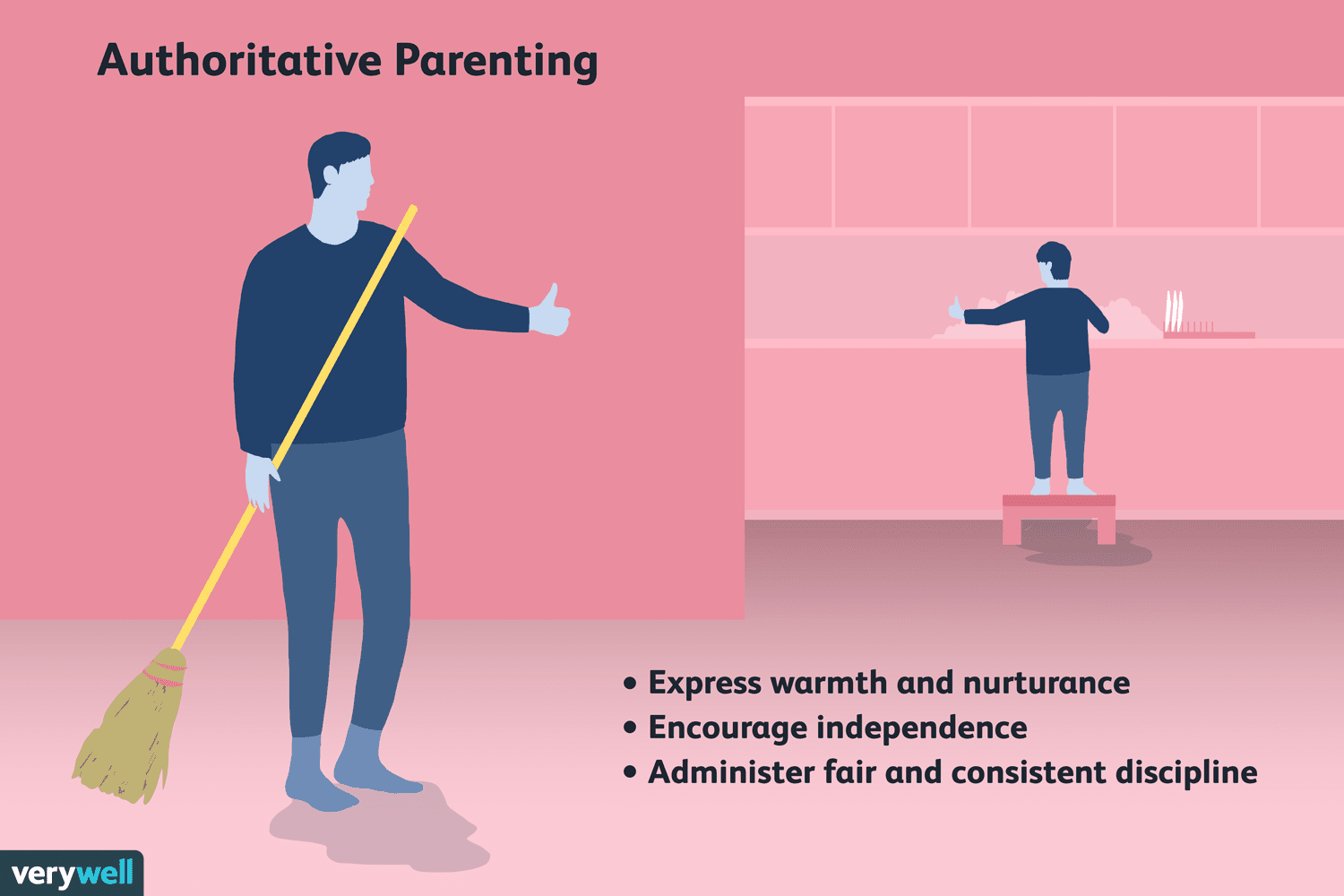
Authoritative parenting is somewhere in between authoritarian and permissive parenting styles. Authoritative parents set reasonable boundaries for their children, and have reasonable expectations of their children in terms of behavior. They have structure, but also feel encouraged to make their own decisions. Children from authoritative homes are more well rounded, and well adjusted (Panetta et. al. 2014)(Lauer and Lauer p. 279).
Making Adjustments
Looking at these three types of parenting, what kind of parent are you? Are you permissive and somewhat uncaring? Or are you overly concerned and controlling? Studies suggest the most productive type of parenting is authoritative, where there are equal amounts of affection, autonomy, and boundaries. What are some ways you feel you may need to adjust your parenting style? Let’s talk about different ways in which to adjust our parenting.
Talking Positively
Talking positively is a big one. Children will learn from what they experience, so it is really important that we as parents speak to our kids in a way that isn’t angry, and doesn’t harm their self-esteem, or belittle. Be empathetic with your children. Listen to how they are feeling, because like you, they can’t control how they feel. Its our job as parents to help them understand their feelings and react to them appropriately. That can’t be done if we speak to them angrily, negatively, or dismissively. For example, say three year old Susan drops her ice cream cone and she is devastated about it. What is the correct way to respond? One could say “Stop crying. It is just ice cream, we can get more another day.” Or one could respond with empathy and say “Oh no! I am so sorry you are sad. Its too bad you dropped your ice cream. Do you want a hug? We don’t have time to go back and get more, but we can come back tomorrow.” The second response would be one that would help the child feel understood. In that response we are acknowledging our children rather than being dismissive. Keep in mind that acknowledging your child’s feelings and thoughts is not agreement, it is simply understanding that they have these feelings and thoughts.
Don’t Yell or be Verbally Abusive
Every parent has a time when their child makes them so angry. I know I made my parents angry on numerous occasions. When it comes to parenting there is an appropriate way to respond when our child misbehaves or mouths off. It is important to remember not to act out in anger. Take a minute, gather your thoughts while your child thinks about what they have done or said, and then approach them. When you are angry, be sure to use authoritative communication. That consists of “I” statements: “I felt so frustrated when you talked back. It makes me feel like you don’t love or respect me when you say things like that.” Those words are very hurtful.” You should learn to put the emphasis on the action, not on the child. If you talk negatively about the child and not the action, it can lower the child’s self esteem, and can seem belittling to the child. The child himself is not inherently bad, the choice he made and the words he used are bad.
It is important to not be verbally abusive to our children. Some people may say that it isn’t abuse because they are not being physically harmed. Unfortunately, that is not the case. There are studies that show that children who have been verbally abused by their parents often have more psychological problems than children who have been physically abused (Steinberg p. 151). Verbal abuse would be belittling the child by saying something like “You have always been a difficult child” or “You will never amount to anything.”
Instead of Criticism, use Guidance
If your child does something wrong, don’t criticize them. That is one way to hurt your child’s self-esteem and sense of self worth. When your child messes up or does something wrong, rather than berate them and belittle, as some parents tend to do, state why the action was wrong, or the general problem, and then find possible solutions. Parents need to understand that nagging does nothing, if not make the child less likely to do what you ask, and usually leads to anger and frustration. Find different ways to motivate your children. Try to be caring and authoritative.
Avoid Sarcasm
This is one that I feel I can’t stress enough. Many people think that sarcasm isn’t harmful, or that people who are offended by it simply can’t take a joke. While there may be some circumstances where sarcasm is appropriate (i.e. a conversation with a friend or peer) but it is not okay when speaking to your children. Dr. Ginott says that “a serious mental health hazard is a parent with a gift for sarcasm. A wizard with words, that parent erects a sound barrier to effective communication” (Ginott p. 61). Parents who tend to use sarcasm when communicating with their children may not realize that their sarcastic remarks are perceived as an attack, and may cause the child to counter-attack so to speak. Sarcasm is also very belittling. It causes children to question themselves, and have a negative view of themselves.
Applying these Adjustments to our Parenting
In reading these possible adjustments, did you see anything you feel you need to work on? Does it seem like maybe there is something you could do better, or not do at all? Being a parent is hard. Children change all the time, and that can be frustrating for us because we have to adapt and learn how to navigate all the changes that they make. We have to learn how to work with them as they change and grow (Think different developmental phases). It is really important to remember that while these changes are frustrating to us, they are also frustrating to our children. Just like being a parent is hard, being a kid can be hard too. We should use empathetic listening, and try to guide them through these phases the best that we can. It is our responsibility to not only adapt our parenting to our child, but to also keep in mind that we can, and should be kind, yet firm. We should help guide our children, and correct when necessary. We need to remember to be kind in our correction, not abusive or harsh, or any way that could demean our children.
Cited Sources
Ginott, H. G. (1965). Between parent and child: new solutions to old problems. New York: Macmillan.
Lauer, R. H., & Lauer, J. C. (2007). Marriage and family: the quest for intimacy (9th ed.). Boston: McGraw-Hill.
Panetta, S. M., et al. 2014. “Maternal and Paternal Parenting Style Patterns and Adolescent Emotional and Behavioral Outcomes.” Marriage & Family Review 50:342–59.
Parade, S. H., A. J. Supple, and H. M. Helms. 2012. “Parenting During Childhood Predicts Relationship Satisfaction in Young Adulthood.” Marriage & Family Review 48:150–69.
Steinberg, L. D. (2005). The ten basic principles of good parenting. New York: Simon & Schuster Paperbacks.
 Parenting Perspectives